
Gynaecology in Damansara, including the things nobody asks about
Periods that have stopped being manageable, a diagnosis you have been given and not had explained, and the symptoms people look up at midnight and then do not mention. These are the questions asked most often in clinic. It is general information, not advice about your own situation, and it is not a substitute for a consultation.
What happens at a gynaecology consultation?
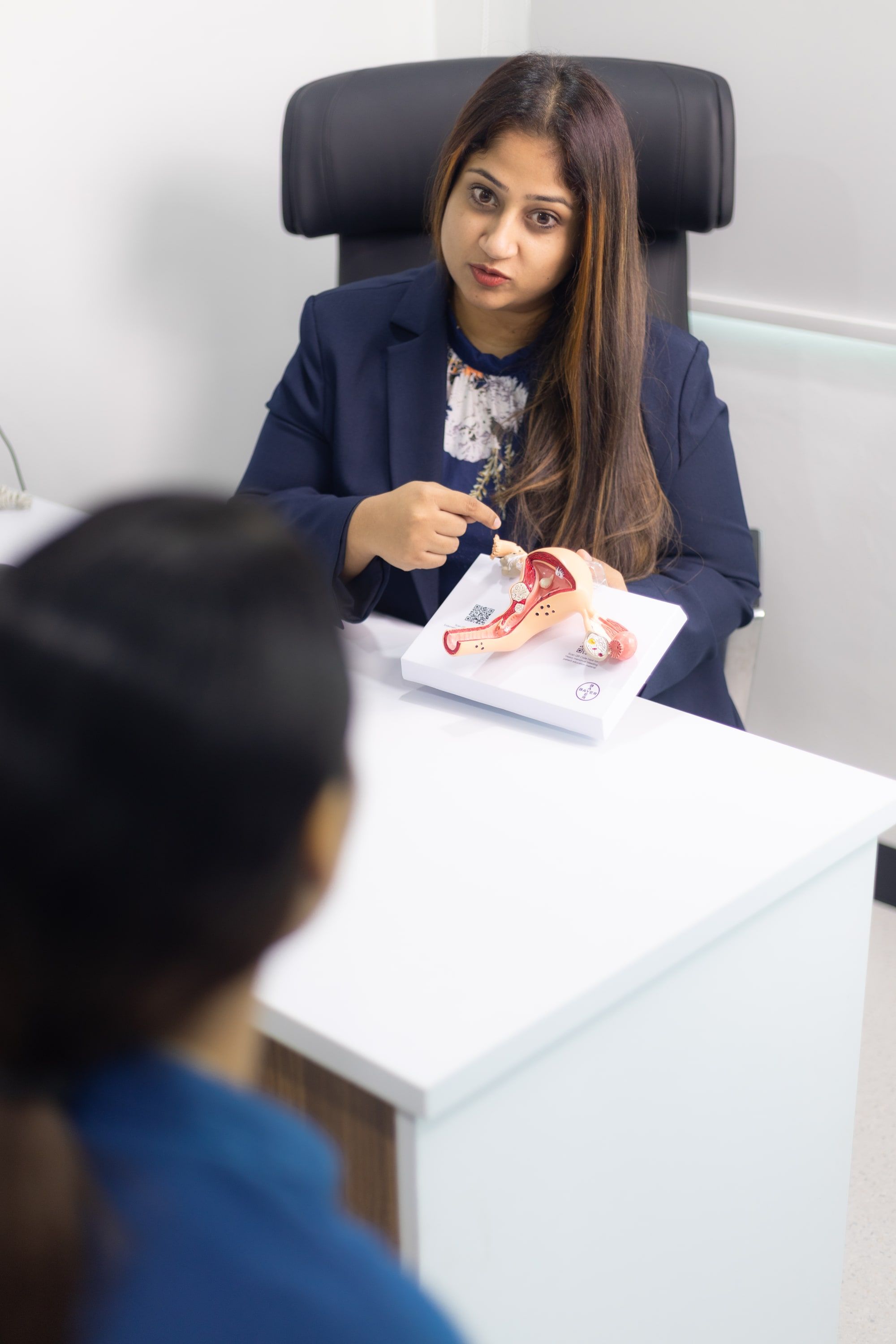
Talking first. What has been happening, how long it has been going on, what your periods do, what you have already tried, and what you are actually worried about, which is often not the thing you booked for. Then, if it is useful, an examination and usually an ultrasound scan in the same room. You leave knowing what the likely explanation is, what would confirm it, and what the options are.
Nothing is examined without being explained first, and you can decline any part of it. An appointment where you only talk is a legitimate appointment.
When are heavy or painful periods worth seeing someone about?
When they interrupt your life. Changing protection every hour or two, flooding through clothes, passing large clots, being unable to work or sleep, or pain that ordinary painkillers do not touch. Many women are told this is simply how periods are, and go years without asking. Heavy bleeding has causes that can be identified, and several of them are treatable without surgery.
Bleeding between periods, bleeding after sex, or any bleeding after the menopause is a different matter and should be looked at rather than watched.
Any bleeding after the menopause should be seen, not monitored.
What is PMOS (formerly PCOS), and how is it diagnosed?
PMOS, polyendocrine metabolic ovarian syndrome, is the condition that was called PCOS until 2026. It is a hormonal condition where ovulation happens irregularly or not at all. It shows up as irregular or absent periods, sometimes as acne or unwanted hair growth, and sometimes as difficulty becoming pregnant. Diagnosis needs two of three things: irregular ovulation, raised androgen levels on a blood test or the signs of them, and a particular appearance of the ovaries on a scan.
The old name, polycystic ovary syndrome, was changed because it was wrong twice over. The cysts are not cysts: they are follicles, which every ovary has, and in this condition there are more of them than usual sitting in a ring near the surface. And the condition is not only an ovarian one. It affects hormones and metabolism throughout the body, which is why the new name says so.
If you were diagnosed before 2026 you will have PCOS written on your letters. It is the same condition and the same diagnosis. Nothing about your care changes because the name did.
Both names are in use during the changeover. PCOS and PMOS mean the same thing.
What is endometriosis?
Tissue like the lining of the womb growing outside it, most often on the ovaries, the ligaments behind the womb, or the lining of the pelvis. It responds to the monthly hormone cycle the way the lining does, which is why the pain tends to follow a pattern. It can cause severe period pain, pain during sex, pain opening the bowels, and difficulty becoming pregnant. It can also cause almost nothing.
It is often diagnosed late, sometimes many years after the symptoms started, because severe period pain gets normalised by everyone including the person having it. A scan can suggest it. Certainty usually needs a laparoscopy, which is a camera through a small cut.
What are fibroids and ovarian cysts?
Fibroids are growths of muscle in the wall of the womb. They are not cancer. Whether they matter depends entirely on where they sit and how big they are: some cause heavy bleeding or pressure, and many cause nothing at all. Ovarian cysts are fluid-filled sacs on the ovary. Most are part of the normal monthly cycle, appear and disappear on their own, and are found by accident on a scan done for another reason.
Being told you have one of these on a scan report is not, by itself, news that anything needs doing. The question is whether it is causing a problem, and that is answered by what you are experiencing rather than by the measurement.
Found on a scan is not the same as needing treatment.
What is cervical screening (a pap smear), and how often is it needed?
A sample of cells taken from the cervix, tested for the human papillomavirus and for early changes in the cells. It takes a few minutes, is done in clinic, and is uncomfortable rather than painful for most women. It is a screening test done when you are well, not a test for symptoms. Anything unusual, particularly bleeding after sex or between periods, needs its own appointment rather than waiting for the next screen.
How often it is repeated depends on your age and on what the last result showed. You will be told at the time when the next one is due.
What help is there for the menopause?
More than most women are offered. Hot flushes, disturbed sleep, mood changes, joint aches, vaginal dryness and difficulty concentrating are all part of the same hormonal change, and all of them have options. Hormone replacement is one, in several forms, and it is not right for everyone. Non-hormonal treatments exist for those who cannot take it or do not want it. The starting point is a conversation about which symptoms are actually bothering you.
The perimenopause, the years of change before periods stop, is when most of this begins, and it is frequently mistaken for something else. Irregular periods in your forties are worth discussing rather than enduring.
Will I need a scan or an internal examination?
Often a scan, sometimes an examination, and never without being asked first. A pelvic ultrasound gives a clear view of the womb and ovaries and is usually done in the same appointment, so you are not sent away and asked to return with a report. An internal scan gives a better picture than one done over the abdomen, and it is explained before it is offered rather than after.
You can ask for a chaperone, you can bring somebody with you, and you can say no to any part of an examination at any point, including once it has started. None of that needs a reason.
You can ask for a chaperone, and you can decline any examination.
Where does Dr Bheena Vyjhallaja practise, and how do you book?
Dr Bheena Vyjhallaja practises at KPJ Damansara Specialist Hospital in Petaling Jaya, Selangor, which serves Damansara, Bandar Utama, Kota Damansara, Mutiara Damansara and the wider Klang Valley. Appointments are made on WhatsApp, by telephone through the hospital switchboard, or online through the hospital’s own booking page. Keep medical details for the consultation rather than the message, where there is time to go through them properly.
Clinic
Dr Bheena VyjhallajaKPJ Damansara Specialist Hospital
119, Jalan SS 20/10, Damansara Utama
47400 Petaling Jaya
Selangor, Malaysia
Clinic hours
- Monday to Friday
- 8.30am to 5pm
- Saturday
- 8.30am to 12.30pm
Closed on Sunday and on public holidays.
Languages
English, Bahasa Malaysia and Tamil