
Dr Bheena Vyjhallaja Book an appointment Book
Dr Bheena Vyjhallaja standing beside the desk in her consulting room

Dr Bheena Vyjhallaja

Consultant Obstetrician, Gynaecologist and Reproductive Medicine Specialist

EFRM (ESHRE / EBCOG)
European Fellow in Reproductive Medicine. A subspecialty qualification in fertility, examined across Europe.

KPJ Damansara Specialist Hospital, Petaling Jaya

A newborn baby looking towards the camera.

Wanting a child is the most ordinary thing in the world. When it does not happen, it stops feeling ordinary very quickly.

Time is the one thing you cannot get back.

How long does one IVF cycle take?

From the first consultation to the pregnancy test, one IVF cycle usually runs about six to eight weeks. Most of that is waiting rather than treatment. The two parts that take real time are the investigations at the start, which have to follow your own cycle, and the fortnight of daily injections before the eggs are collected. Everything else happens in single days.

The seven stages are listed alongside with how long each one takes. Any of them can be opened directly.

Stage 1 of 7

First consultation and investigation

2 to 4 weeks

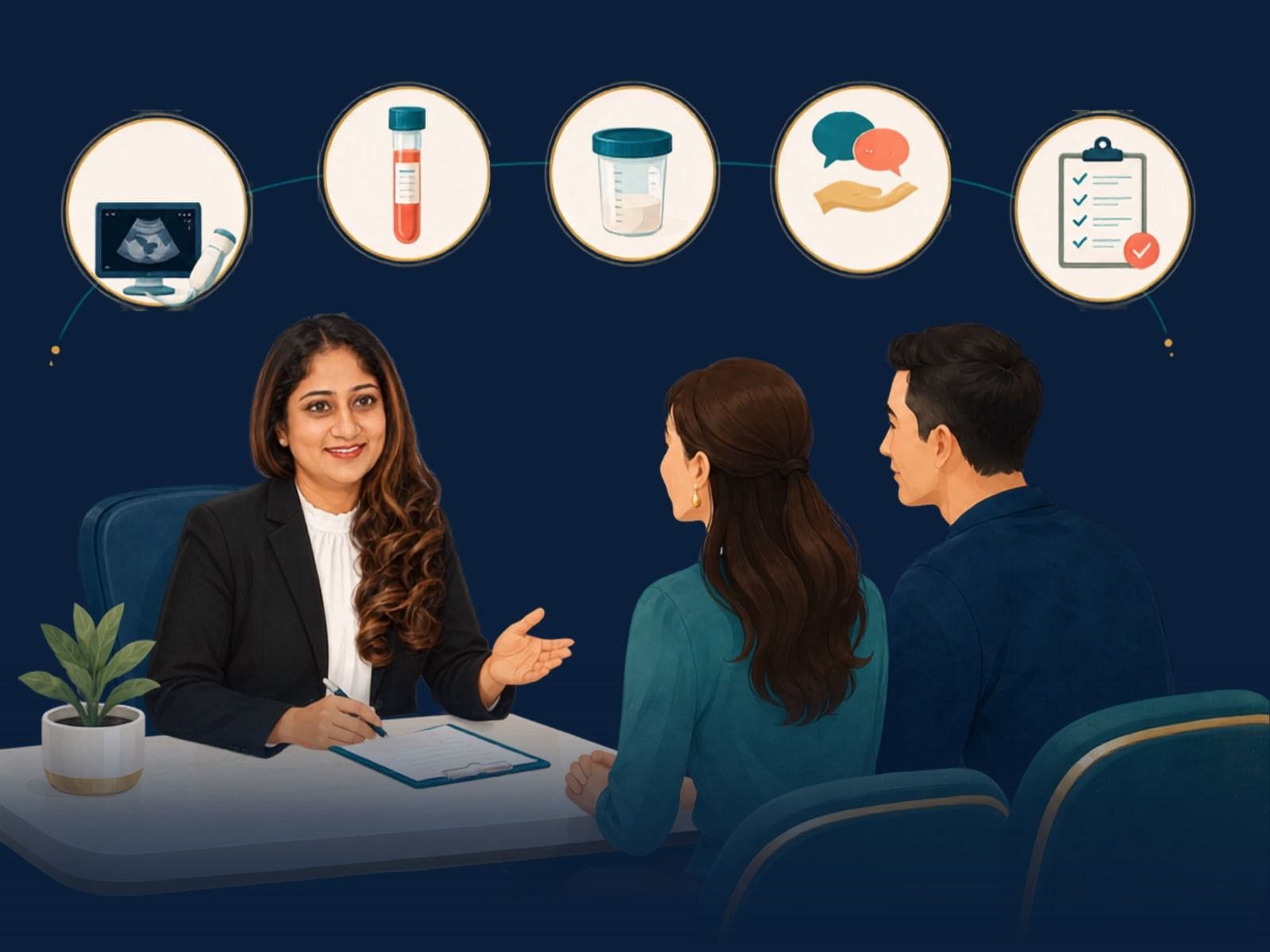
We start by testing both of you. For you, blood tests at particular points in your cycle, and a scan of your ovaries and womb. For your partner, a semen analysis. Most of these weeks are spent waiting for your cycle to reach the right day for a particular test, not waiting for a laboratory.

Two appointments, blood tests, one scan, and a semen analysis for your partner.

Illustration of a first consultation: a couple across the desk from Dr Bheena Vyjhallaja, with the investigations ringed alongside them, an ultrasound scan, a blood tube, a semen analysis pot and a chart of results.
Stage 2 of 7

Ovarian stimulation

8 to 14 days

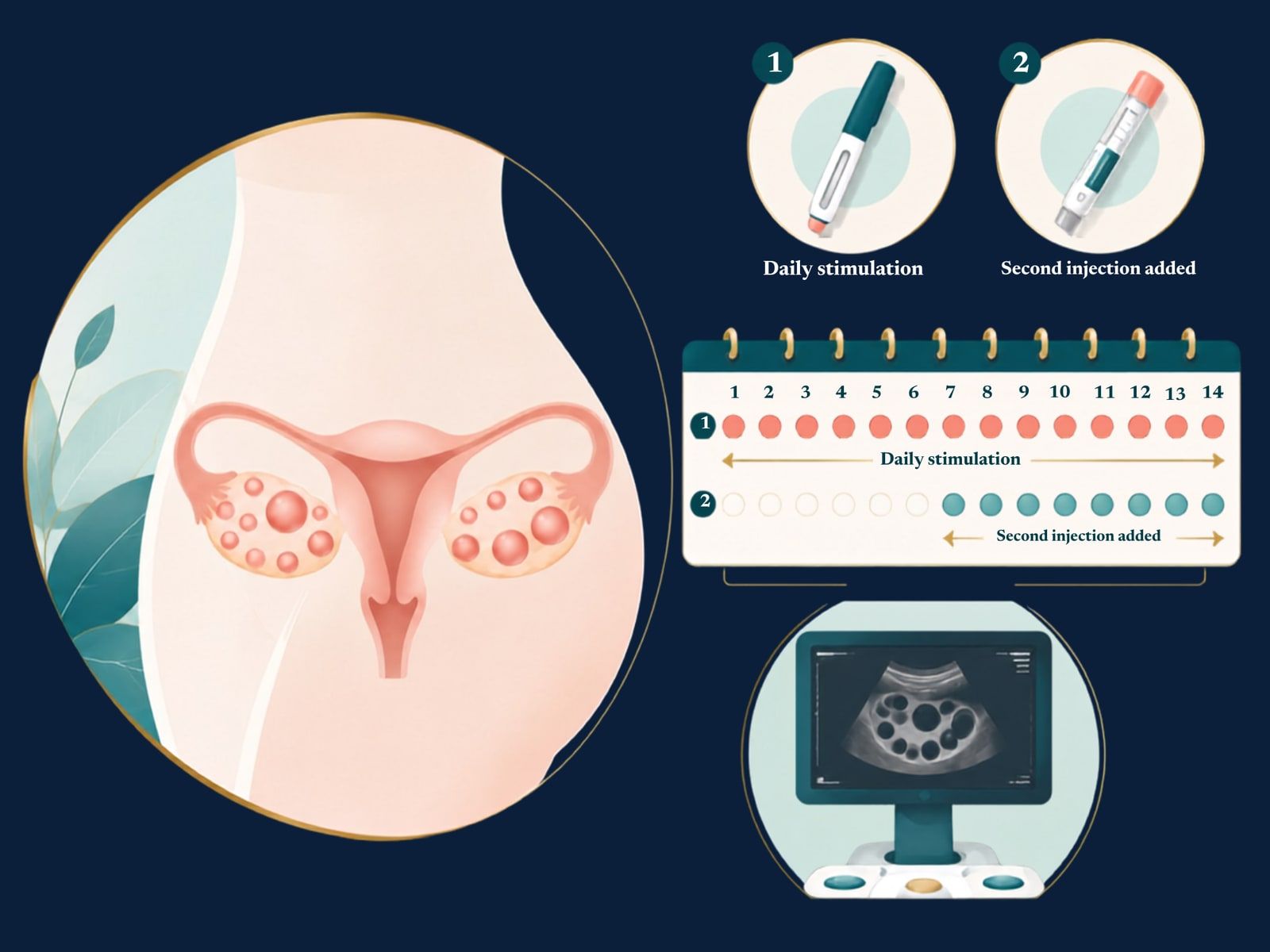
You give yourself a small injection under the skin each evening. The medication asks your ovaries to ripen several eggs at once, instead of the single egg they would usually release. You come in every few days for a scan so the follicles can be counted and measured, and the dose adjusted.

An injection each evening, at home, by you. Three or four scans across the fortnight.

Diagram of ovarian stimulation: the womb and both ovaries carrying several growing follicles, a fourteen day calendar showing the daily injection and the second injection added partway through, and an ultrasound image of the follicles.

Stage 3 of 7

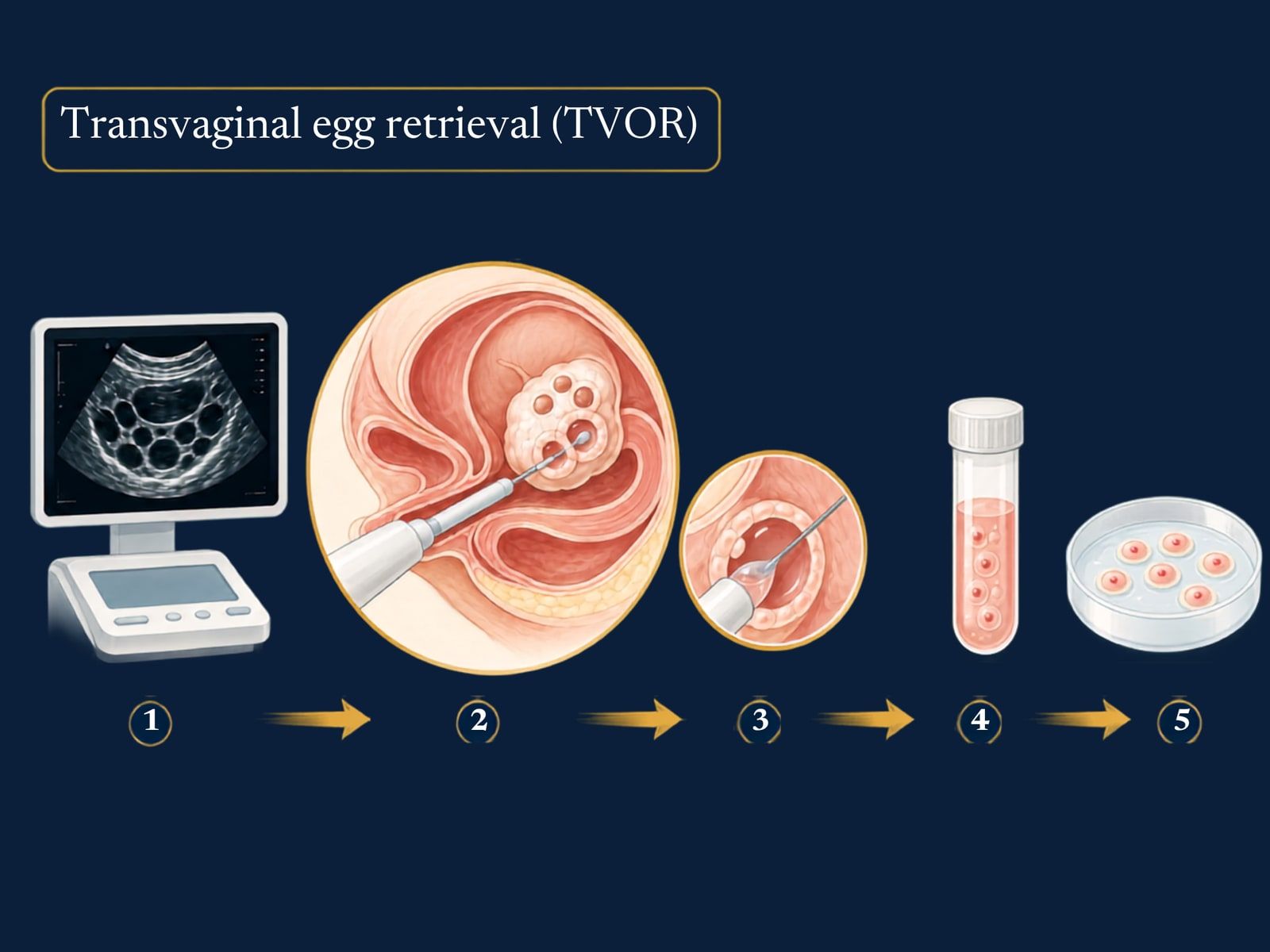
Egg retrieval

One day

A day procedure under sedation, so you are asleep for it. A fine needle passes through the vaginal wall into each ovary, guided by ultrasound, and the fluid is drawn out of each follicle. You rest for a few hours afterwards and go home the same day. Arrange for somebody to take you home.

You are in the hospital for a morning. You cannot drive afterwards.

Five step diagram of transvaginal egg retrieval: ultrasound locating the follicles, a fine needle passing through the vaginal wall into a follicle, fluid and egg drawn through the needle, the fluid collected into labelled tubes, and the eggs identified and placed into culture medium.

Stage 4 of 7

Fertilisation in the laboratory

Overnight

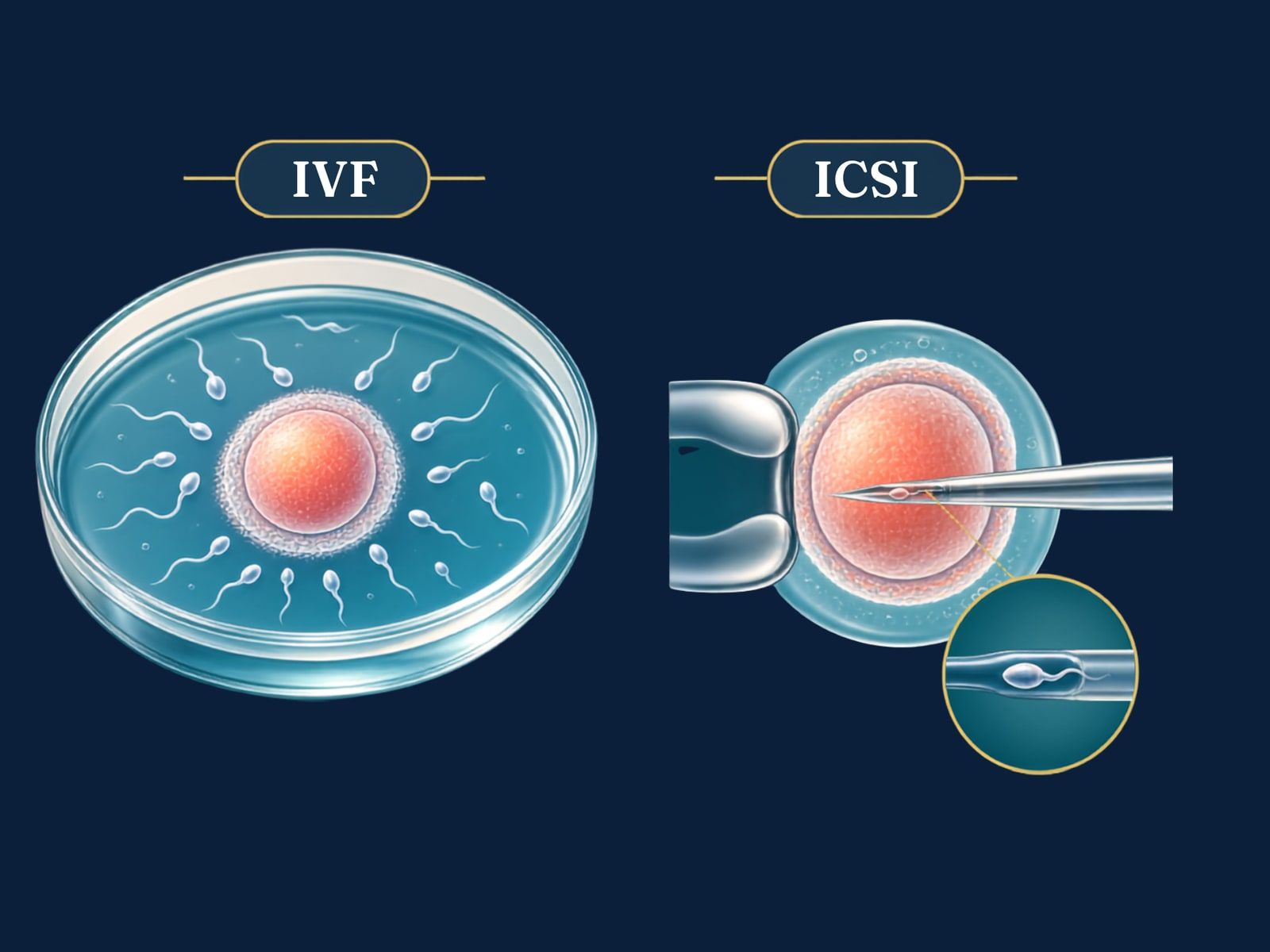
Your eggs and your partner’s sperm go to the embryologist. In conventional IVF they are placed together in a dish and the sperm reaches the egg on its own. In ICSI, one sperm is injected directly into each egg. Which method is used was decided earlier, from the semen analysis.

Nothing for you to do. You go home and the laboratory calls the next morning.

Two panels comparing the methods. In conventional IVF the egg sits in a dish surrounded by sperm that reach it on their own. In ICSI the egg is held steady on one side while a fine pipette places a single sperm inside it, shown enlarged in an inset.

Stage 5 of 7

Embryo development

3 to 5 days

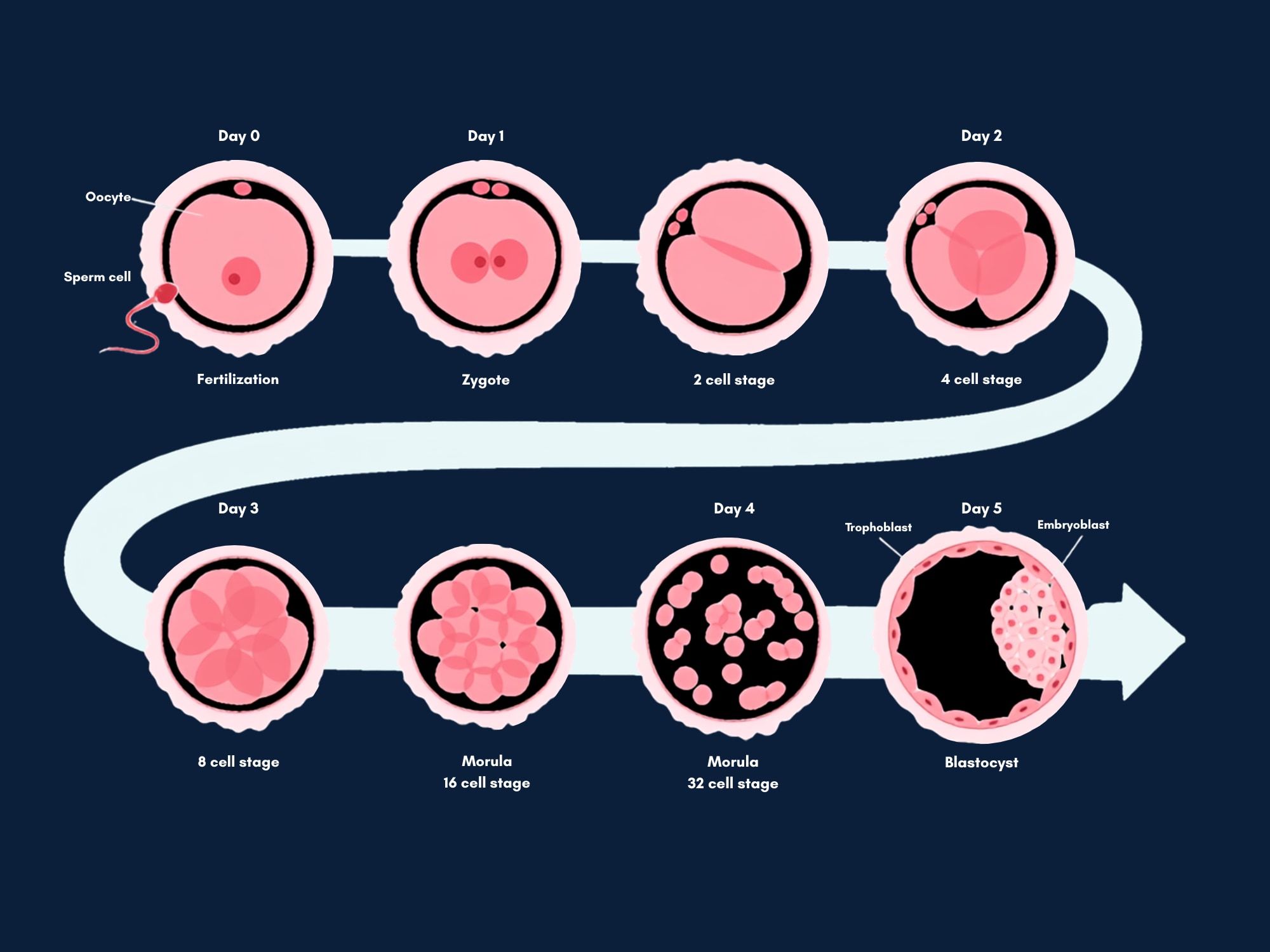
The fertilised eggs are kept in an incubator and checked each day to see how they are dividing. Not every egg fertilises, and not every fertilised egg carries on growing. That is ordinary and expected, and it is why more than one egg is collected. You will be told the numbers as they change.

A phone call each day, or every other day, with the count.

Embryo development across six days. Day nought, a sperm cell reaching the oocyte at fertilisation. Day one, the zygote with two pronuclei. Day two, the two cell and four cell stages. Day three, eight cells. Day four, a morula of sixteen and then thirty-two cells. Day five, a blastocyst, with the trophoblast forming the outer ring and the embryoblast gathered to one side.

Stage 6 of 7

Embryo transfer

One day

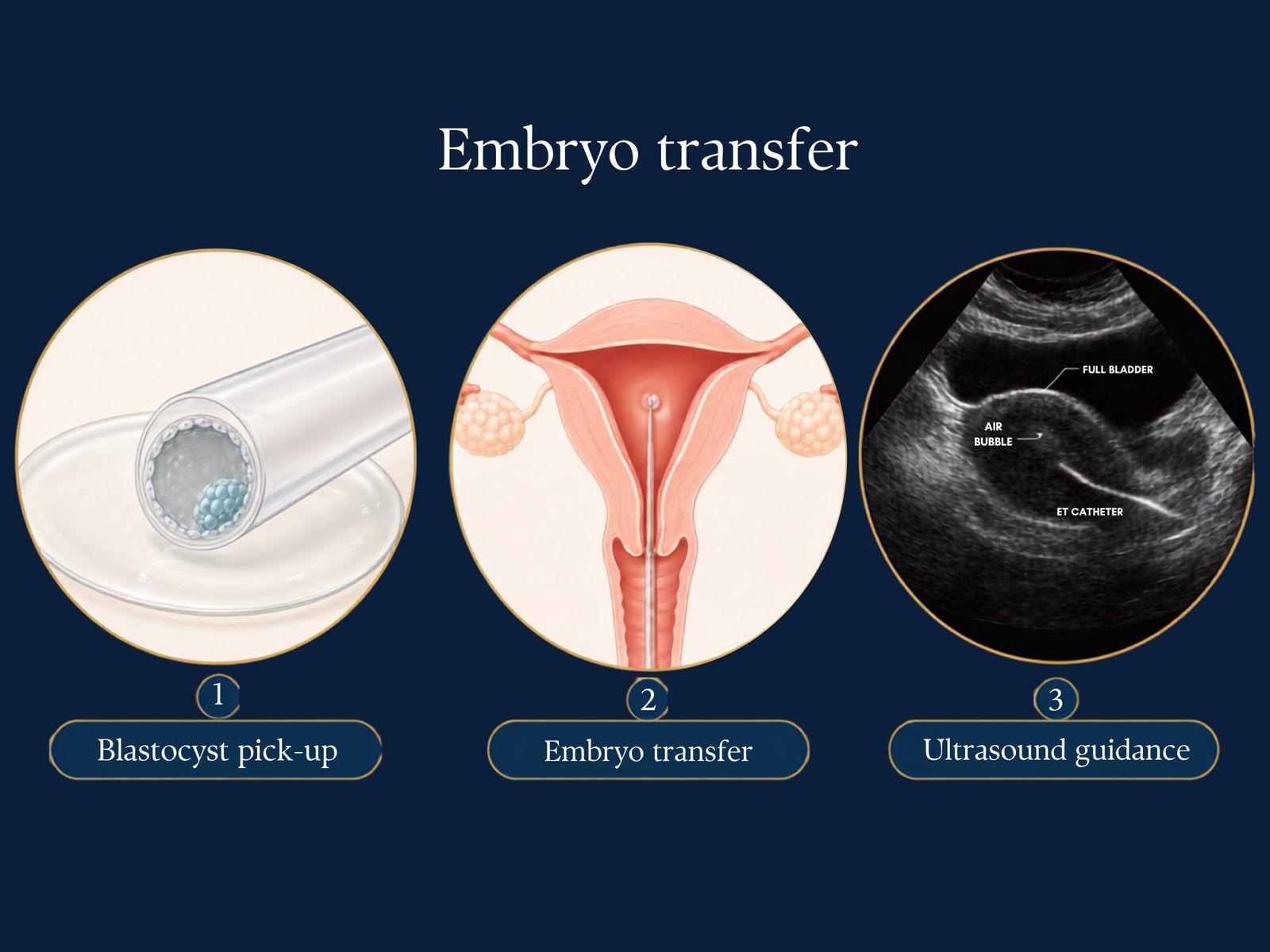
A much smaller procedure than the retrieval. No sedation and no needle. A soft, fine catheter passes through the cervix and the embryo is placed in the womb, guided by ultrasound. It takes a few minutes. Many women say it feels much like a smear test. You walk out and go back to your day.

Around twenty minutes in the room. You can drive yourself home.

Three step diagram of embryo transfer: the blastocyst drawn up into a soft catheter, the catheter passing through the cervix to place the embryo in the womb, and an ultrasound image showing the catheter and the full bladder used to guide it.

Stage 7 of 7

The wait, and then the test

9 to 14 days

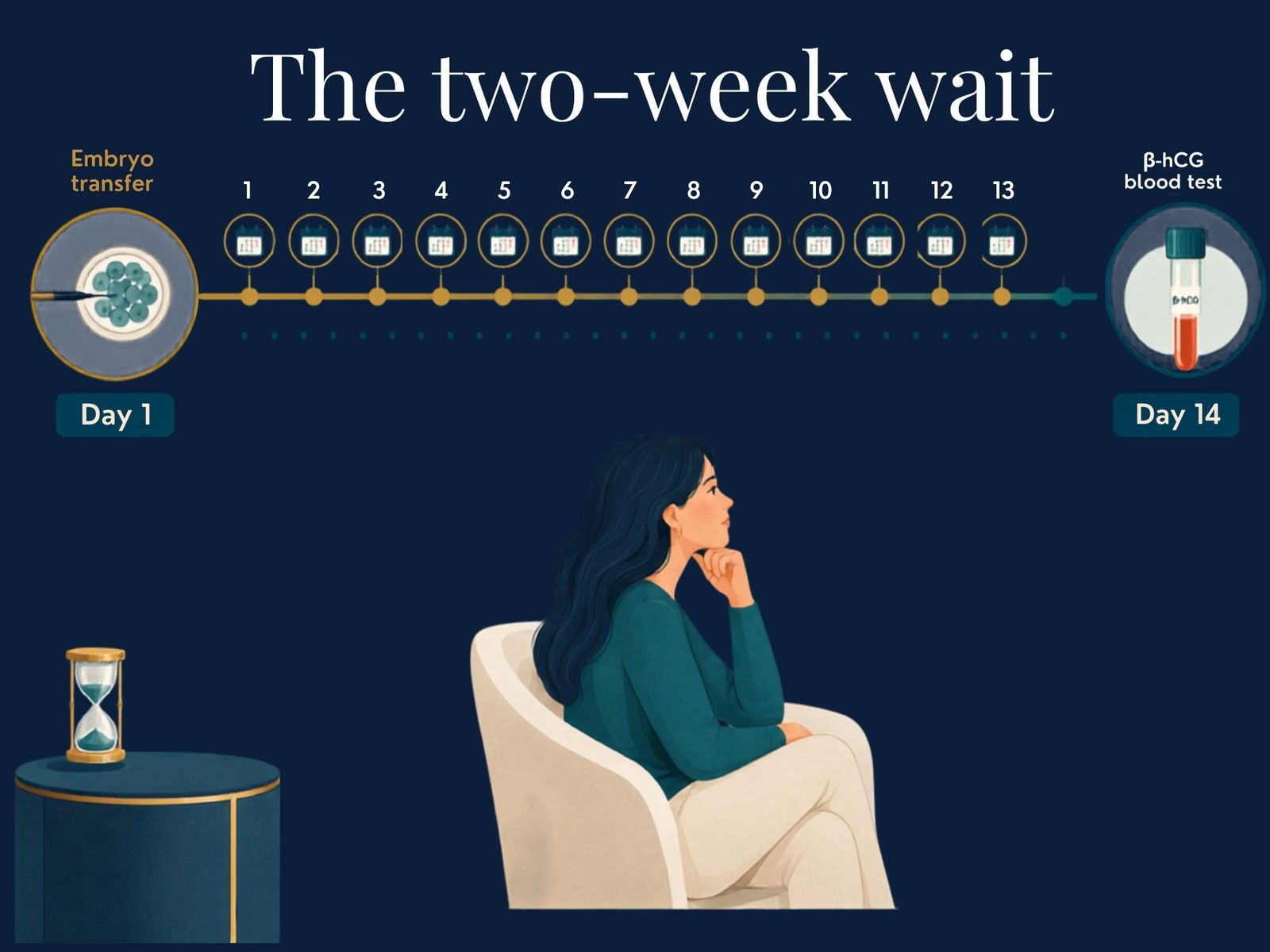
Then you wait. A blood test at the end of it measures the pregnancy hormone, and you will be given that date before you leave the hospital. Rest if resting helps you, and work if work helps you. Ordinary daily life during these two weeks is not what decides the result.

One blood test at the end. The date is fixed on the day of transfer.

Timeline of the two week wait: day one at the embryo transfer, fourteen numbered days across the page, and the beta hCG blood test at day fourteen. Below it a woman sitting at home, and an hourglass on the table beside her.

Twelve more questions are answered on the IVF and fertility page, including what each test looks for and why a semen analysis should be among the first things done rather than the last.

What does Dr Bheena Vyjhallaja treat?

Fertility is Dr Bheena Vyjhallaja’s subspecialty, so most of the work is investigating why a couple has not conceived and treating what is found. That includes IVF, ICSI and IUI, ovulation disorders such as PMOS, the condition renamed from PCOS, endometriosis, recurrent miscarriage and fertility preservation. She also takes general gynaecology and antenatal bookings, and does outpatient hysteroscopy and day surgery.

IVF and ICSI

In vitro fertilisation, and the version of it where a single sperm is injected into each egg. Which one suits a couple is decided from the tests, not from preference.

Fertility investigation for both partners

A full set of tests for the woman and for the man, done at the same time rather than one after the other.

Ovulation disorders, including PMOS

Irregular periods, absent periods, and polyendocrine metabolic ovarian syndrome, the condition renamed from PCOS in 2026. Often the first thing to look at, and often treatable without IVF.

Endometriosis

Diagnosis and management, including where it is affecting fertility and where the pain is the more pressing problem.

Recurrent miscarriage

Investigation after repeated early losses, to look for a cause that can be identified and, where there is one, treated.

Intrauterine insemination

IUI, where prepared sperm is placed directly into the womb around the time of ovulation. A smaller step than IVF, and the right one for some couples.

Fertility preservation

Freezing eggs or embryos, whether for a medical reason such as cancer treatment, or because the timing is not right yet.

Outpatient hysteroscopy and day surgery

Looking inside the womb with a fine camera, in clinic, without a general anaesthetic. Also laparoscopy, and transcervical removal of fibroids.

General gynaecology

Heavy or painful periods, bleeding after the menopause, fibroids, ovarian cysts, and contraception including coil fitting.

Antenatal care and delivery

Care through pregnancy and birth, including pregnancies that need watching more closely. Her specialist training carries a good deal of complex obstetrics, so a high risk pregnancy is familiar ground.

What are Dr Bheena’s qualifications?

Dr Bheena Vyjhallaja qualified in medicine at the University of Dundee and completed the whole of her specialist training in the United Kingdom, finishing with the CCT in November 2022. On top of that she holds the European Fellowship in Reproductive Medicine, accredited jointly by ESHRE and EBCOG, which is a subspecialty qualification in fertility. She also holds a postgraduate diploma in medical education.

EFRM ESHRE / EBCOG August 2023

European Fellow in Reproductive Medicine

Accredited jointly by ESHRE and EBCOG, the European societies for reproductive medicine and for obstetrics and gynaecology

A subspecialty qualification in fertility medicine. It sits on top of the specialist training, not inside it, and it is examined and assessed across Europe rather than in one country.

CCT UK November 2022

Certificate of Completion of Training

General Medical Council, United Kingdom

Awarded when a doctor finishes the whole UK specialist training programme, start to finish. It is what allows a doctor onto the UK specialist register.

MRCOG UK June 2017

Member of the Royal College of Obstetricians and Gynaecologists

Royal College of Obstetricians and Gynaecologists, London

The UK professional membership in obstetrics and gynaecology. It is examined in three parts, over years, alongside full-time hospital work.

Her medical degree, and the other qualifications, on the About page

A couple standing together, expecting a baby, reflected in a mirror.

Not everyone who comes here is trying to conceive

She takes antenatal bookings and general gynaecology alongside the fertility work. Her specialist training carries a good deal of complex obstetrics, so a pregnancy that needs watching more closely is familiar ground rather than a referral onwards.

Why Dr Bheena came back to Malaysia

I trained in Britain for the whole of my career as a doctor. Dundee for the degree, then the full specialist programme, then a fellowship in reproductive medicine in Wales. I could have stayed.

I came back in January 2026 for my family. Malaysia is home, and there comes a point where you want to be near the people you come from.

What I brought back with me is a way of working. Sit down. Explain what is happening. Explain what the next test will tell you and what it will not. That is how I was taught, and it is how I intend to keep going here.

Where does Dr Bheena Vyjhallaja practise, and how do you book?

Dr Bheena Vyjhallaja practises at KPJ Damansara Specialist Hospital in Petaling Jaya, Selangor, which serves Damansara, Bandar Utama, Kota Damansara, Mutiara Damansara and the wider Klang Valley. Appointments are made on WhatsApp, by telephone through the hospital switchboard, or online through the hospital’s own booking page. Keep medical details for the consultation rather than the message, where there is time to go through them properly.


Clinic

Dr Bheena Vyjhallaja
KPJ Damansara Specialist Hospital
119, Jalan SS 20/10, Damansara Utama
47400 Petaling Jaya
Selangor, Malaysia

Clinic hours

Monday to Friday
8.30am to 5pm
Saturday
8.30am to 12.30pm

Closed on Sunday and on public holidays.

Languages

English, Bahasa Malaysia and Tamil

Book via WhatsApp